

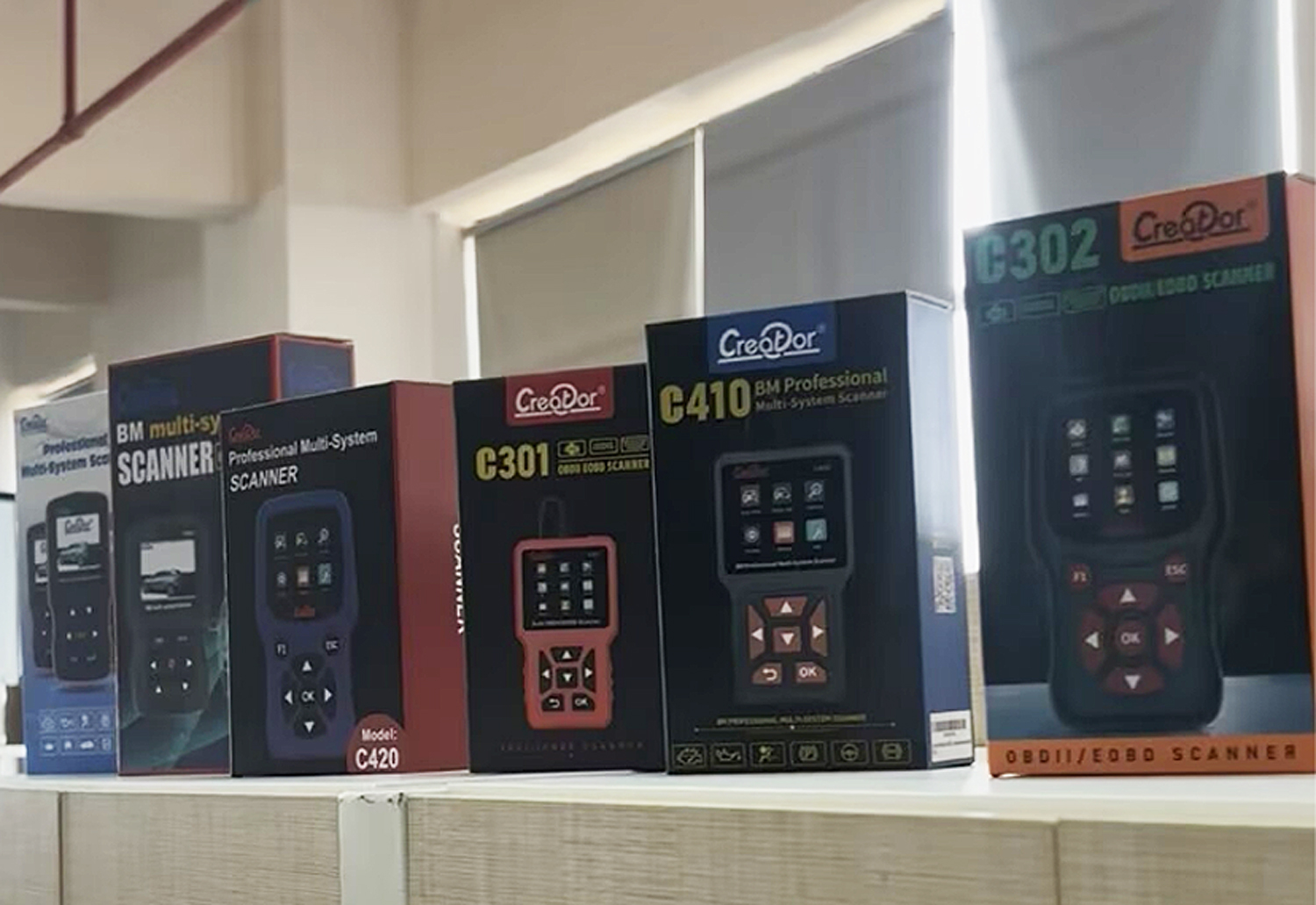

In 2026, as the wave of “electrification, connectivity, and intelligence” in the automotive industry deepens, On-Board Diagnostics (OBD) detection equipment has broken through its traditional single function and transformed into an intelligent service hub driven by AI, supported by connectivity collaboration, and covering all scenarios, becoming a key link in the automotive industry chain.
The market scale continues to expand. In 2026, the global market scale is expected to reach 2.218 billion US dollars, and the Chinese market will exceed 4.87 billion yuan, with an average annual compound growth rate of over 10%. The growth momentum comes from the mandatory popularization of policies, the penetration of new energy vehicles (with a global penetration rate exceeding 50%), and the explosion of after-market demand, driving the equipment to extend from professional tools to popular terminals. The industrial chain structure is being reshaped, and competition has shifted to the full-stack capability of “hardware + software + data + services”. Leading enterprises are building ecological barriers, and the localization of chips and sensors is accelerating, forming a pattern of “leading enterprises dominating the ecology and mid-tier enterprises focusing on segments”.
Technological innovation is the core breakthrough point. Empowered by AI, it has realized a transition from passive troubleshooting to active prediction. The missed detection rate of full-system intelligent diagnosis has dropped to below 0.3%, and it can predict vehicle faults 30 days in advance with an accuracy rate of over 88%, and can quickly adapt to mainstream models around the world. Connectivity has built a “cloud-edge-end” collaborative ecology, supporting multi-mode communication and remote diagnosis, and using blockchain technology to ensure data credibility, forming a closed loop of “detection – law enforcement – repair – re-inspection”. The hardware form presents the parallel development of specialization and lightweight, adapting to the needs of different scenarios such as maintenance, personal use, and commercial vehicles.
Application scenarios have been fully expanded. Maintenance factories have improved maintenance efficiency by 40% with the help of equipment and achieved transparent services; the supervision field has realized intelligent road inspection and annual inspection, and some regions have piloted off-line annual inspection for vehicles; in the field of new energy vehicles, the equipment has added exclusive functions such as full-life cycle management of batteries and intelligent connectivity system detection; in the personal car owner and used car markets, the equipment is popularized and easy to use, becoming the core basis for vehicle condition self-inspection and valuation.
The industry presents four major trends: expanding functional boundaries, transforming the business model to “hardware + subscription services”, accelerating localization replacement, and improving the standardization system. Opportunities and challenges coexist. The explosion of new energy vehicles and the “dual carbon” strategy bring incremental demand, while facing challenges such as technological adaptation, data security, and homogeneous competition.